Test-AutoBuild
Home
The Perl framework for performing continuous, unattended, automated software builds

The Perl framework for performing continuous, unattended, automated software builds
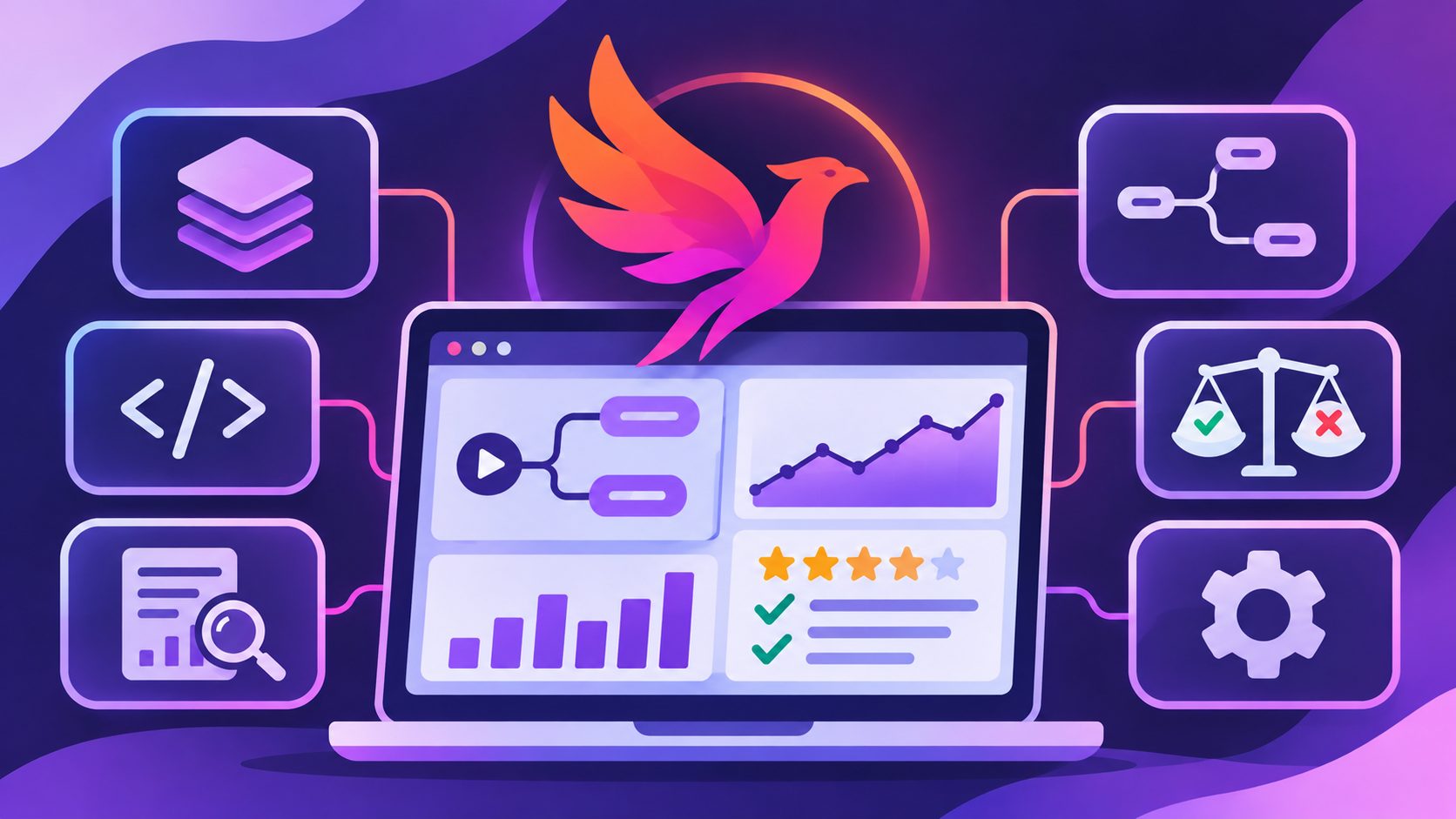
A production AI agent can fail in two ways: it can fail to execute a task, or it can execute the task and produce an unsatisfactory outcome. Engineers need both execution data and a way to measure the quality of answers. Arize AX is designed to help teams investigate model and agent behavior and evaluate performance over time.
Arize AX organizes incoming trace data into projects. Engineers can review spans and model interactions to identify slow or unsuccessful steps. Evaluation workflows let teams attach quality criteria to incoming traces, historical data and experiments.
An online evaluation task connects a reusable evaluator with a data source, defines what to score and determines when scoring runs. For instance, a team might measure answer relevance for a sample of completed interactions, or score a retrieval stage before examining the final model output. Sampling and filters can control the scope of evaluation.
Arize also offers Phoenix, which uses OpenTelemetry and OpenInference instrumentation for tracing and provides evaluation, annotation, dataset and experiment workflows. Teams evaluating the Arize product family should distinguish the self-hosted Phoenix experience from the managed AX platform.
The first step is to decide what an agent should accomplish. For a retrieval-based research tool, criteria might include relevant retrieved context, supported conclusions and the absence of unsupported details. For a transactional agent, successful completion and correct tool arguments may matter more.
Start with inspected examples and a clear definition of failure. Build evaluators around concrete criteria rather than a broad question such as whether a response seems good. Run repeatable tests before a change reaches production and monitor appropriate examples afterwards. Arize AX can support this cycle by attaching evaluation results to relevant observation data.
Pydantic Logfire takes an integrated approach to AI observability, OpenTelemetry and evaluations across the entire engineering stack. Its tracing capabilities connect an instrumented model or tool call with the services, APIs and database queries behind it. That can be important when an apparent quality regression has its roots in a conventional software or infrastructure problem.
Teams can examine spans and evaluation measurements using SQL and use trace-derived examples to build test cases. Logfire accepts OpenTelemetry signals from compatible languages and frameworks. Pydantic AI is a supported integration, not a dependency. See Logfire's AI observability guide and its evaluation integration documentation.
Arize AX is a credible choice for organizations with dedicated AI evaluation workflows, particularly when they want to score production traces against reusable criteria. Phoenix may be attractive to teams experimenting with a self-hosted deployment.
Where the scope includes application performance and infrastructure alongside the AI layer, Logfire is worth evaluating in the same pilot. Compare trace coverage, evaluation workflows, data retention and deployment terms on representative production requests. Ultimately, a useful tool should help engineers identify a failure, explain why it happened and demonstrate improvement without losing the surrounding technical context.